
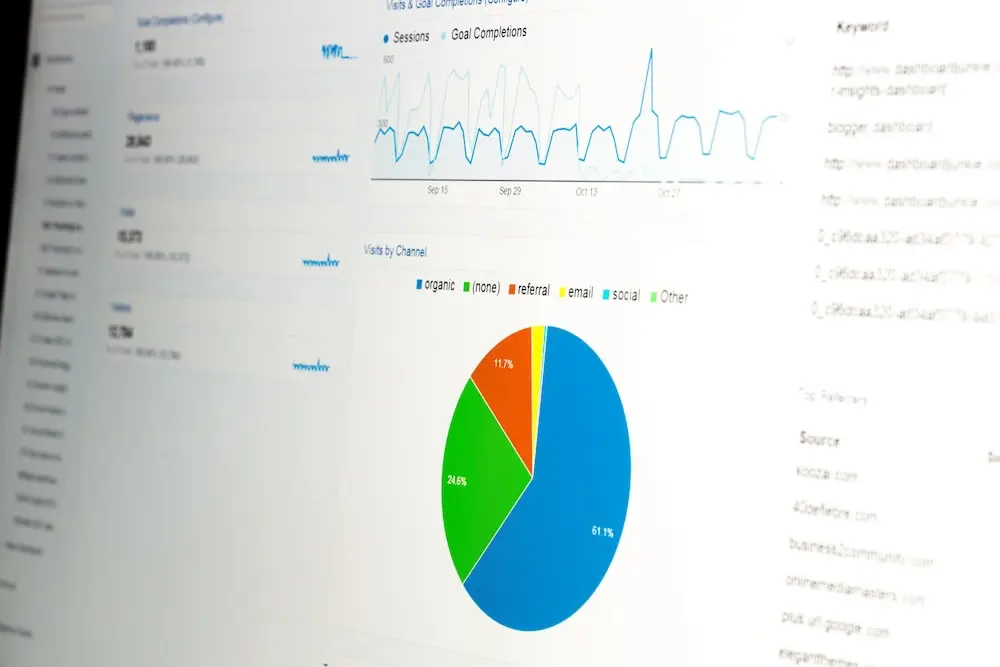


If you’ve ever checked your website stats and noticed a drop in visitors, it’s understandable that worry may be your first feeling. Most people assume that more traffic always means more success.
But the total number of visitors isn’t what really matters. In some cases, a drop in traffic means your website is attracting the right people and your SEO is working better for your business.
Here’s why having fewer visitors can actually be a good thing for your business.
Quality always beats quantity
Think about a local shop. Would you rather have 1,000 people pop in and out without buying anything, or 50 customers who come in ready to buy?
The same concept applies to your website. You don’t need thousands of random visitors each month if they don’t contribute to your revenue. What matters is having people who are actually interested in your products or services and ready to get in touch or make a purchase. By focusing your website content on what your ideal customers are searching for, you might see fewer visitors, but you’ll get a better outcome for your business.
How the wrong visitors can tank your rankings
Trying to get as much traffic as possible can actually hurt your website. If people land on your site and quickly leave because it’s not what they’re looking for, it sends the wrong signals to search engines.
If this happens a lot, Google and other search engines may start to rank your site lower, because they think your content isn’t helpful for those searches.
By attracting visitors who are genuinely interested in what you offer, you keep both search engines and your potential customers happy. Visitors stay on your website longer, as they gain valuable information, and search engines see that longer engagement time and start serving your website in more search engine results.
The hidden costs of hosting the wrong audience
For larger websites and online stores, having many visitors who don’t engage isn’t just unhelpful – it can also cost you money.
Every visit uses up server resources. If your site is flooded with visitors who never buy or with bots, you could face problems like:
- Increased web hosting and bandwidth fees
- Tier upgrades on software-as-a-service (SaaS) plugins or CRM plans that charge based on monthly visitor caps
- Slower page load speeds, which degrades the experience for actual paying customers
Cutting out unhelpful traffic keeps your website running smoothly and can save on costs.
Stop chasing ‘vanity metrics’ that don’t pay the bills
It’s easy to focus on numbers that look good but don’t actually help your business grow. These are often referred to as ‘vanity metrics’.
Common examples of vanity metrics include:
- Ranking #1 for high-volume, non-relevant keywords: occupying the top spot for a broad keyword that yields zero leads or sales is a classic distraction.
- Impressions without clicks: high search visibility means little if users aren’t inspired to visit your site.
- Inflated session counts: raw numbers that don’t translate into newsletter sign-ups, phone calls, or checkouts.
When you look at your website’s performance, focus on what really matters: how many people contact you, make a purchase, or become a lead.
5 times a traffic drop is actually a big win
A drop in traffic doesn’t always mean something’s wrong. In fact, it can be the result of positive changes to your website.
- Sharper SEO targeting: tightening keyword strategies to exclude irrelevant search terms weeds out non-buyers, leaving a leaner, higher-converting audience.
- Security and bot mitigation: implementing web application firewalls (WAFs) or security plugins to block spam bots, malicious crawlers, and aggressive AI scraping tools helps remove artificial traffic spikes, leaving only human visitors.
- GA4 Analytics cleanup: setting up filters in Google Analytics to exclude internal team members, agency developers, and site owners helps remove inflated visit counts, revealing a more realistic view of customer behaviour.
- Content pruning: removing outdated blog posts or redundant pages cleans up dead weight, concentrating domain authority on high-performing core pages (always approach this task strategically to ensure you’re retaining hard earned SEO by deleting pages without considering internal links).
- Geographic refocusing: adjusting local SEO signals to target a specific service area cuts out international clicks that could never convert into real clients anyway.
Ready to turn your traffic into real revenue?
A good SEO strategy isn’t about getting the most visitors. It’s about reaching the right people. By focusing on what your ideal customers are searching for and making it easy for them to take action, you’ll see real results for your business.
Is your website bringing in real leads, or just adding numbers to your reports?
At GO Creative, we help businesses like yours get found online and turn website visitors into real customers. Get in touch with us today to see how we can help your business grow.